Looking for the best school trips in Limpopo? Bynage Team Building delivers CAPS-aligned educational excursions, leadership camps, adventure programmes and school team-building experiences for Grade R–12 learners at The Ranch Resort near Polokwane.
Planning a school trip in Limpopo should not force teachers to choose between educational value, learner enjoyment and responsible supervision.
Bynage Team Building provides structured school excursions for Grade R to Grade 12 learners at The Ranch Resort near Polokwane. Programmes combine experiential learning, outdoor activities, teamwork, conservation, leadership and cultural education.
Schools can also receive planning documents such as programme schedules, service-provider risk assessments, curriculum-alignment notes and parent communication templates to support their internal approval process.
This guide explains how to choose the right school excursion, what makes a trip educational, which Bynage programmes are available and what schools should consider before booking.
What makes a school trip educational?
A school trip becomes educational when it has a clear purpose, an age-appropriate programme and an opportunity for learners to reflect on what they experienced.
A beautiful venue on its own is not enough. Learners need structured activities that encourage them to observe, participate, solve problems and apply what they have learned in the classroom.
A well-designed excursion may help learners develop:
- teamwork;
- communication;
- confidence;
- resilience;
- leadership;
- curiosity;
- responsible decision-making; and
- greater awareness of the environment and society.
Experiential learning gives learners the opportunity to learn by doing. Instead of only discussing communication or leadership in class, learners experience what happens when a team must complete a task, respond to a setback or support a struggling team member.
The strongest school trips connect the activity to a lesson, question or learning outcome.
Why schools choose professionally facilitated excursions
Many destinations welcome school groups but provide little more than access to the venue and its facilities.
Teachers may then have to create activities, divide learners into groups, manage timing and keep everyone engaged throughout the day.
A professionally facilitated excursion is different.
The programme is planned before the learners arrive. Groups follow structured activities, facilitators give instructions and the day follows an organised schedule.
Teachers remain responsible for supervising learners, managing discipline and communicating any medical or behavioural needs. However, they are supported by a team responsible for delivering the programme.
A normal venue visit compared with a facilitated programme
| Normal venue visit | Facilitated Bynage programme |
|---|
| The venue is the main attraction | The programme is designed around learner outcomes |
| Teachers may organise activities | Activities are planned before arrival |
| Learners may have unstructured free time | Learners move through organised stations |
| Educational outcomes may be unclear | Intended outcomes are identified |
| Teachers manage most of the programme | Facilitators manage activity delivery |
| Reflection is often informal | Activities can include guided debriefing |
The difference is structure.
A facilitated school trip should feel like a complete educational experience rather than a collection of unrelated activities.
Where do Bynage school trips take place?
Bynage school excursions are hosted at The Ranch Resort, approximately 25 kilometres south of Polokwane on the N1.
The bushveld setting creates opportunities for outdoor education, environmental learning, leadership activities, school team building and adventure programmes.
The location is especially convenient for schools in Polokwane and Mokopane. Schools also travel from other parts of Limpopo, including Makhado, Tzaneen, Giyani, Thohoyandou, Musina, Modimolle, Bela-Bela, Burgersfort, Hoedspruit and Phalaborwa.
Schools travelling longer distances should consider:
- departure and arrival times;
- the length of the programme;
- rest stops;
- learner comfort;
- meal arrangements; and
- whether an overnight camp would offer better value.
The goal should be to give learners enough time to participate meaningfully rather than spending most of the day travelling
Bynage school-trip programmes
Bynage programmes serve learners from Grade R to Grade 12.
The final programme should be chosen according to learner age, group size, physical ability, available time, budget and intended learning outcomes
Gold Rush Challenge for Grade R–3
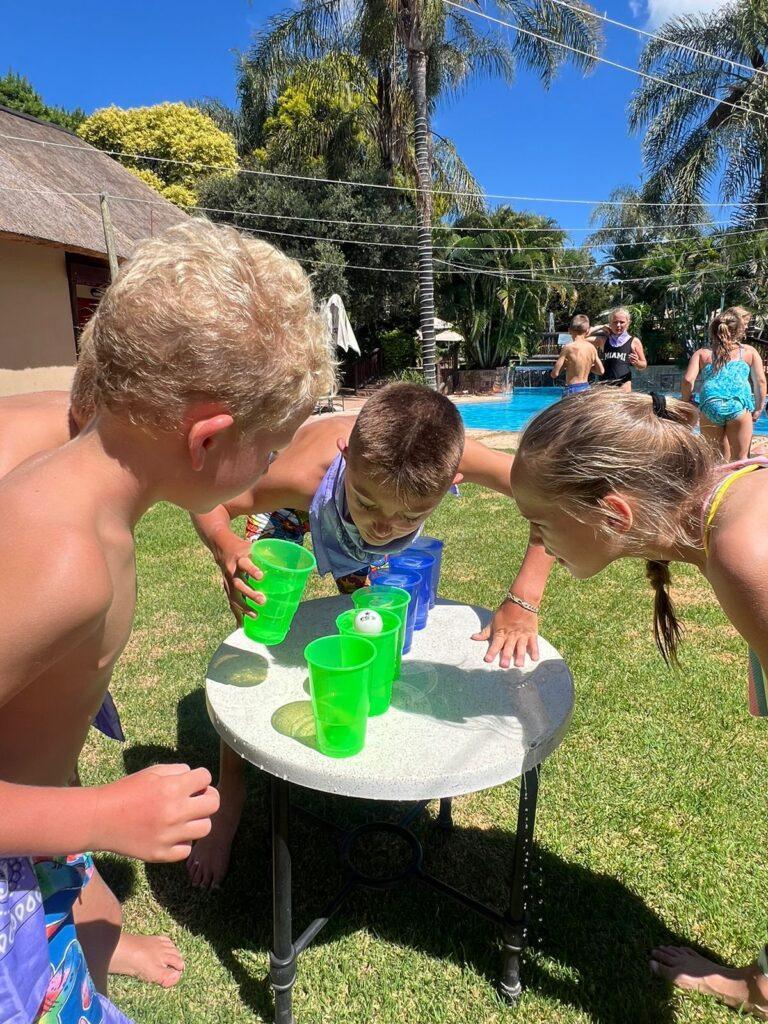
The Gold Rush Challenge is designed for Foundation Phase learners.
It uses play, storytelling and simple adventure missions to encourage:
- counting;
- colour recognition;
- listening;
- movement;
- teamwork;
- turn-taking; and
- basic problem-solving.
Activities are short, active and easy to understand. The programme allows younger learners to learn through structured play without making the trip feel like another classroom lesson.
Young Ranger programme for Grade 4–12
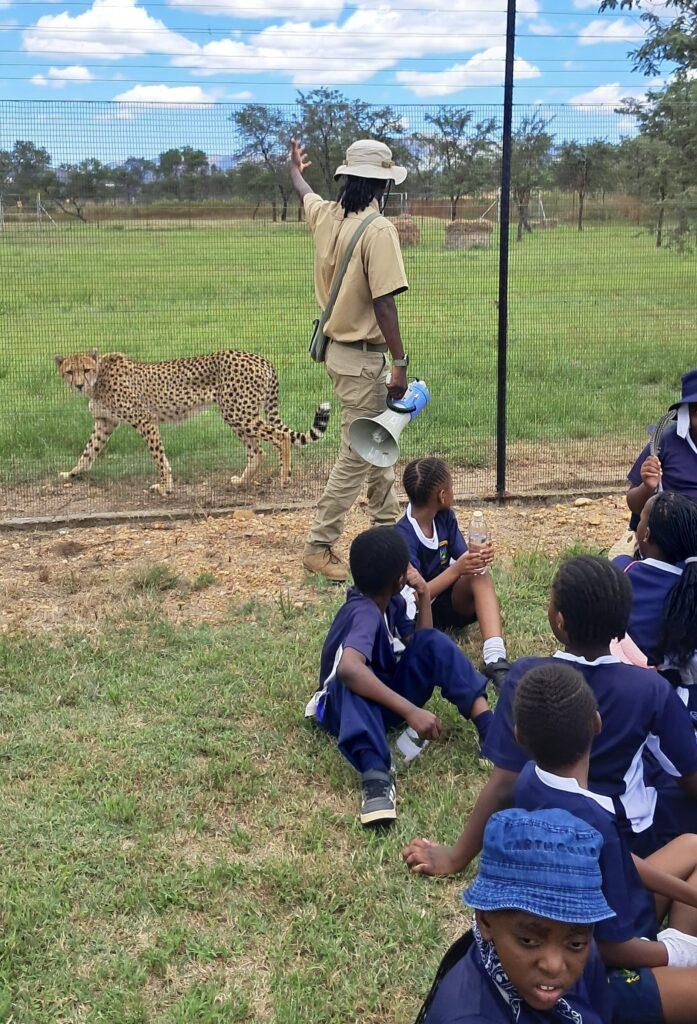
The Young Ranger programme introduces learners to conservation, nature and wildlife awareness in an outdoor environment.
Depending on the selected experience, learners may explore:
- plants and animals;
- habitats;
- biodiversity;
- conservation;
- environmental responsibility;
- human impact on nature; and
- careers connected to wildlife and environmental management.
The programme can support themes taught in Natural Sciences, Social Sciences, Geography and Life Orientation.
Rope Course programme for Grade 4–12
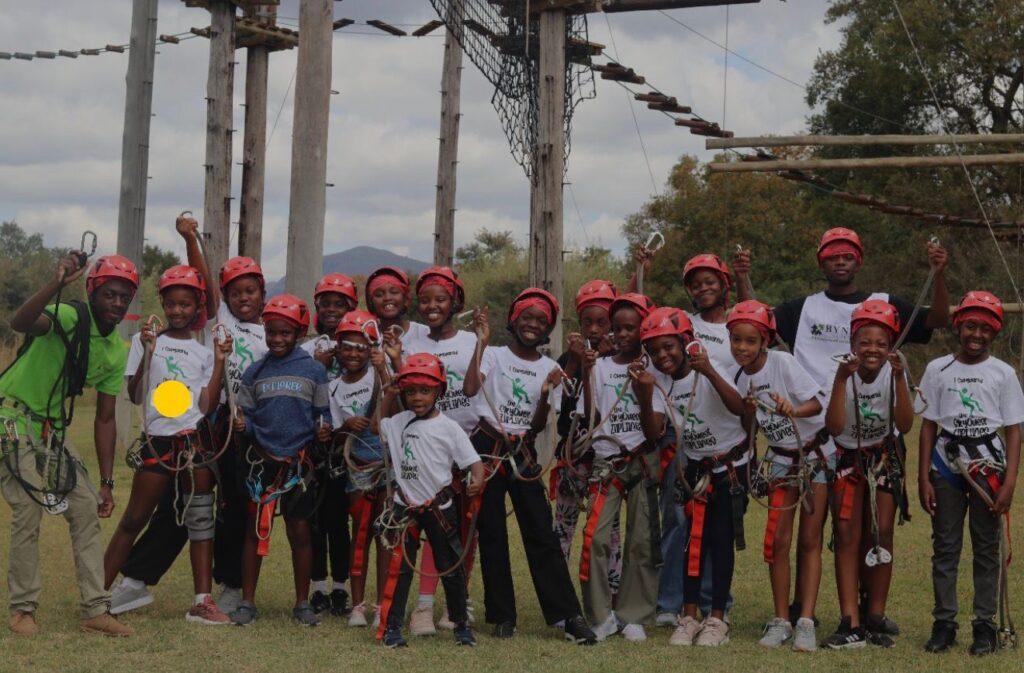
The Rope Course uses physical challenge to support communication, trust, resilience and confidence.
Learners are required to listen to instructions, recognise personal limits, support one another and respond calmly when a task feels difficult.
The activity can be linked to questions such as:
- How did the team communicate?
- What helped people continue?
- How did the group respond when a plan failed?
- What is the difference between courage and recklessness?
- How can we support others respectfully?
Participation should always consider learner age, health, physical ability and emotional readiness.
Industrial Tours for Grade 7–12
Industrial tours help learners understand how businesses, workplaces and production systems operate.
Depending on the industry and tour partner, learners may be introduced to:
- workplace roles;
- production processes;
- quality control;
- occupational health and safety;
- business operations;
- technology;
- entrepreneurship;
- supply chains; and
- career opportunities.
Industrial tours can support Life Orientation, Economic and Management Sciences, Economics, Business Studies and career education.
They help learners see how school subjects connect to real workplaces and professions.
Are the programmes CAPS-aligned?
Bynage programmes can be connected to CAPS subjects and learning themes when the correct programme is matched to the appropriate grade.
CAPS alignment should be specific. It should identify the activity, grade, subject and intended learning outcome.
For example:
| Programme | Possible curriculum connections |
| Gold Rush Challenge | Foundation Phase numeracy, movement, listening and collaborative play |
| Young Ranger | Natural Sciences, Social Sciences, Geography and environmental awareness |
| Rope Course | Life Orientation, communication, personal development and decision-making |
| Industrial Tours | EMS, Business Studies, Economics, Life Orientation and career education |
| Cultural Immersion | History, Social Sciences, Languages, Creative Arts and heritage education |
A programme should not be described as CAPS-aligned merely because it is educational.
The school and service provider should identify the genuine curriculum connection for the participating grade.
How teachers can extend learning before and after the trip
A school excursion becomes more valuable when it is connected to classroom learning before and after the event
Before the trip
Teachers can ask learners to:
- identify what they hope to learn; and
- complete a short introductory activity.
During the trip
Learners can:
- observe;
- participate;
- record information;
- ask questions;
- complete team challenges;
- take on assigned roles; and
- connect activities to classroom concepts.
After the trip
Teachers can ask learners to:
- write a reflection;
- create a poster;
- complete a worksheet;
- deliver a presentation;
- discuss what the team learned; or
- connect the experience to an assessment task.
This before-during-after approach helps transform a day out of school into a complete learning journey.
How to choose the right school-trip programme
The best programme is not necessarily the one with the greatest number of activities.
It is the programme that fits the school’s purpose.
Before requesting a quotation, schools should answer the following questions:
- Which grades will attend?
- How many learners and adults are expected?
- What should learners gain from the trip?
- How much time is available?
- What is the school’s realistic budget?
- Are there medical, mobility, dietary or behavioural needs?
- Does the school want a one-day excursion or an overnight camp?
Choose the programme according to the outcome
| Desired outcome | Recommended programme direction |
| Learning through play | Gold Rush Challenge |
| Conservation and environmental awareness | Young Ranger |
| Confidence, trust and teamwork | Rope Course |
| Career and workplace exposure | Industrial Tour |
| Heritage and cultural awareness | Cultural Immersion |
| Deeper leadership development | Multi-day leadership camp |
| Class bonding and communication | Facilitated school team building |
Programmes may be combined for a full-day experience, but schools should avoid including so many activities that learners are rushed through them.
Quality of participation is more important than quantity.
One-day excursion or overnight leadership camp?
A one-day excursion is suitable for schools that want a focused experience with simpler transport and lower overall costs.
It may work well for:
- curriculum enrichment;
- class bonding;
- conservation learning;
- adventure activities;
- reward trips; or
- short leadership programmes.
A multi-day camp provides more time for:
- leadership development;
- learner responsibility;
- team interaction;
- evening activities;
- reflection;
- behavioural observation; and
- personal growth.
The school should select the format according to the intended outcomes rather than choosing an overnight camp simply because it appears more exciting.
What documents may be needed?
The exact approval process may differ between schools, districts and education authorities.
A school may require:
- an excursion proposal;
- principal approval;
- SGB or delegated committee approval;
- parent or guardian consent;
- a programme schedule;
- a learner register;
- transport information;
- emergency contacts;
- medical information;
- a risk assessment;
- a supervision plan;
- venue details; and
- service-provider information.
Overnight camps may require additional accommodation, meal, supervision and emergency-planning documents.
Bynage may provide supporting material such as:
- a programme proposal;
- activity schedule;
- service-provider risk assessment;
- CAPS-alignment notes;
- parent communication template;
- learner consent template;
- packing guidance;
- venue information; and
- quotation.
These documents support the school’s planning process. They do not replace the school’s own approvals, policies or responsibilities.
What should a school-trip risk assessment cover?
A risk assessment should cover the full journey, not only the activities at the venue.
Schools should consider:
Transport
- roadworthy vehicles;
- suitable drivers;
- seat availability;
- loading and unloading;
- emergency contacts;
- rest stops; and
- learner behaviour on the bus.
Venue
- access control;
- toilets;
- water;
- shade;
- terrain;
- emergency exits;
- weather exposure; and
- communication systems.
Activities
- equipment condition;
- facilitator competence;
- safety briefings;
- participation restrictions;
- protective equipment;
- activity boundaries; and
- emergency procedures.
Learner needs
- allergies;
- medication;
- mobility requirements;
- dietary needs;
- anxiety;
- behavioural support; and
- chronic medical conditions.
Supervision
- adult-to-learner ratios;
- headcounts;
- group registers;
- toilet procedures;
- transition points;
- adult responsibilities; and
- lost-learner procedures.
The assessment should reflect the actual group, date, transport arrangement and activities.
What are teachers responsible for during the trip?
Professional facilitation does not remove the school’s duty of care.
Teachers and accompanying adults should continue to:
- maintain the learner register;
- supervise behaviour;
- manage medication according to school policy;
- communicate learner needs;
- conduct headcounts;
- monitor assigned groups;
- support emergency procedures; and
- handle disciplinary matters.
Bynage facilitators deliver the agreed activities, explain instructions, manage programme flow and apply activity-related safety controls.
The best results come from cooperation between the teachers and facilitation team.
How should schools budget?
Schools should compare the full cost of an excursion rather than only the activity fee.
The budget may include:
- programme or facilitation fees;
- venue charges;
- transport;
- meals;
- accommodation;
- teacher and driver costs;
- additional supervision;
- learner support requirements; and
- contingency funds.
A low-cost venue-only quotation may still require teachers to arrange activities, equipment, facilitation and documentation.
Schools should therefore compare what each quotation includes and which responsibilities remain with the school.
Plan a school trip learners will remember
The best school trips are not simply entertaining.
They have a clear purpose, appropriate activities, responsible safety planning, organised supervision and professional facilitation.
Whether your school is planning a Foundation Phase outing, a Grade 7 leadership experience, a high-school team-building programme, an industrial tour or a conservation excursion, Bynage can help you select an appropriate programme.
Contact Bynage Team Building with your:
- grade;
- learner numbers;
- preferred date;
- budget range; and
- intended outcomes.
Request a:
- programme recommendation;
- detailed quotation;
- programme schedule;
- service-provider risk assessment;
- CAPS-alignment document; and
- school-trip planning pack.
Website: bynageteambuilding.co.za/contact-us


0 Comments